

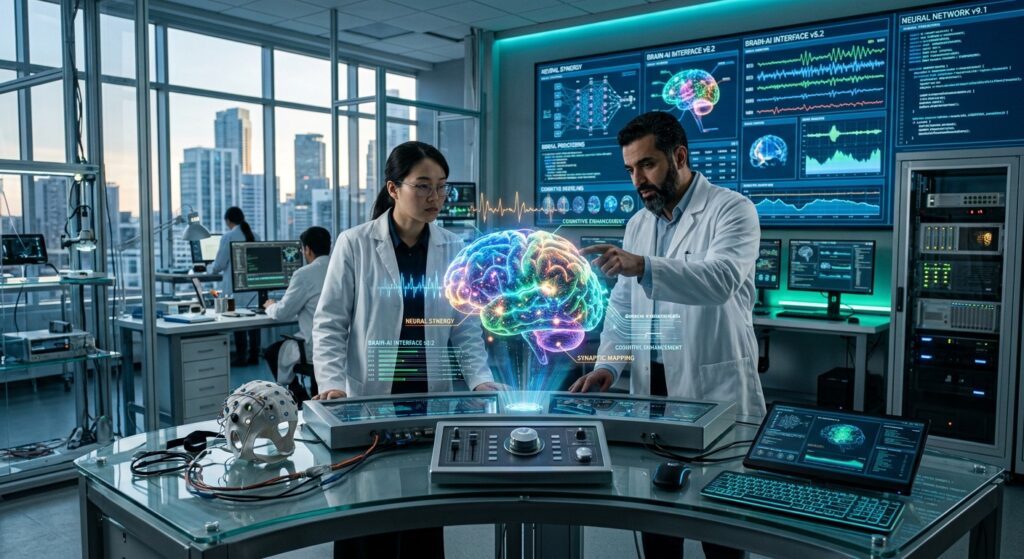
The evolution of physical AI is taking place in a warehouse in San Leandro, California.
- Innovative Training Methods: Encord is at the forefront of creating new training datasets for AI through unique experiences like measuring users’ brainwaves.
- Egocentric Data Collection: The focus is now on ‘egocentric’ video to provide pivotal real-world insights for robotic training.
- Breaking the Data Bottleneck: Generating sufficient quality data remains a significant challenge for the advancement of robotics and AI.
Introducing Physical AI
Physical AI is rapidly evolving, and its latest frontier can be found in a bustling warehouse in San Leandro, California. Here, innovative startup Encord is developing data tooling designed to address a critical gap in the training of AI models. Traditional data collection methods are being augmented with new techniques, including a brainwave-reading headset worn by robotic trainers tasked with constructing and deconstructing a precarious tower of wooden blocks. This transformation is significant, as improving the quality and quantity of training data is essential for the development of humanoid and warehouse robots, pushing the boundaries of what these machines can accomplish.
The implications of this work stretch far beyond mere experimentation. As industries increasingly rely on robotic solutions, the need for credible and comprehensive datasets becomes paramount. Encord’s mission to manufacture real-world training data indicates a substantial shift in how robotics companies approach AI model training. Instead of simply managing existing datasets, they are taking active roles in generating data that more accurately reflects the complexities of the tasks robots will face.
Core Challenges in Data Generation
At the heart of the AI training dilemma lies the challenge of data generation. Companies now primarily rely on two sources for collecting appropriate data: egocentric videos from workers actively engaged in tasks and data generated from robots operated remotely. Encord’s San Leandro facility serves as a testing ground for these methods while experimenting with innovative data modalities such as brainwave readings. The goal is to create datasets that hone the abilities of robotic arms through mimicry, allowing robotic systems to master tasks that are otherwise too complex for them to achieve independently.
Encounters with tasks requiring precision, such as pouring coffee or stacking objects, illustrate the challenges in training robots. Through practices like leader-follower setups, where one robotic arm emulates a human’s movements, a more nuanced understanding of manipulation is developed. Nonetheless, the physical limitations of robotic sensors continue to complicate this process. The development of new modalities, including sensory feedback from muscle signals, promises to enhance data richness and fidelity, though it requires significant investment, complicating the economic equation for startups like Encord.
Future Implications and Considerations
The ramifications of successfully creating comprehensive training datasets extend across multiple sectors, as advancements in physical AI have the potential to transform how industries operate. With emerging companies like Encord infiltrating this space, we may soon witness streamlined integration of robots into roles once deemed impossible. However, the costs associated with producing quality datasets remain a prohibitive factor, forcing many startups to balance their ambitions against their financial realities.
As the quest for better training data continues, the collaboration between industry players may offer the best path to overcoming these barriers. Encord possesses its unique industry vantage point, allowing it to align alongside numerous robotics companies and identify successful data generation techniques before they become mainstream. The necessity for innovation remains clear, as the industry must strategize on how to build the foundational datasets that will empower robots to take on increasingly sophisticated tasks.
In summary, the nexus of robotics and AI is undergoing a significant transformation, with creativity and collaboration shaping the future landscape. As we reflect on these developments, we might ask: How can industry collaboration enhance the quality of training data for AI? What challenges might arise as the demand for real-world datasets increases? And how might breakthrough advances in AI training reshape our workforce?
When you purchase through links in our articles, we may earn a small commission. This doesn’t affect our editorial independence.
Editorial content by Sawyer Brooks